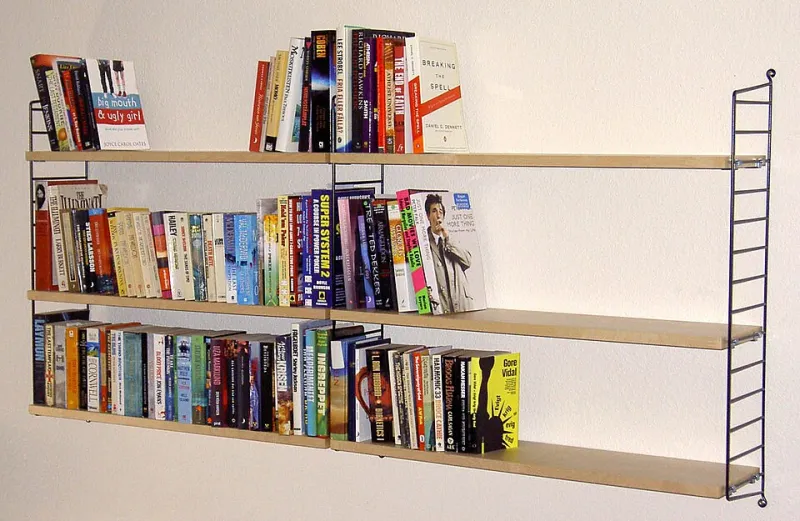
Pass the Pixel: Why Today's Book Clubs Live in Shared Folders, Not Living Rooms

Photo by Photo by Ninthgrid on Unsplash on Unsplash
There was a time when joining a book club meant one thing: somebody's living room, a plate of grocery-store cookies, and a slightly dog-eared paperback making its way around the circle. That paperback was the invitation, the agenda, and the social contract all in one.
Today? The paperback still exists. But the real action has moved somewhere else entirely — to the shared list.
From Bookshelf to Bookmark Bar
Ask any book club organizer under 50 how they run things, and you'll hear the same toolkit on repeat: a shared doc here, a group chat there, a collaborative bookmarking folder humming quietly in the background. The reading list is no longer something you scribble on a napkin at the end of a meeting. It's a living document, annotated, argued over, and added to in real time.
"We used to spend the first twenty minutes of every meeting just remembering what we'd suggested," says Maria, who runs a twelve-person club out of her neighborhood in Columbus, Ohio. "Now we've got a running list everyone can save to. People add books at midnight. They add books from airport terminals. The list never sleeps."
Maria's club migrated to a shared bookmarking setup about two years ago, and she swears attendance went up. Not because the books got better — but because the anticipation did. Members save picks between meetings, leave notes on why they chose something, and vote on next month's read without waiting for the calendar to roll around.
The Reese Effect
It would be impossible to talk about list-driven reading without mentioning the celebrity book club machine. Reese's Book Club, Jenna Bush Hager's Read with Jenna, the resurgence of Oprah's iconic sticker — these aren't just marketing vehicles. They're massive, nationally shared reading lists with millions of implicit members.
And here's the interesting part: local clubs have started borrowing the format. A community group in Portland might not have Reese's budget, but they can replicate the structure — a monthly pick, a why-I-chose-it note, a public list anyone can save from. The celebrity clubs normalized the idea that a curated list is itself a piece of content worth following.
The old 'pass the paperback' tradition assumed scarcity: one copy, limited reach. The new model assumes abundance. Anyone can save anything. The curation is what's valuable now.
What Organizers Actually Say
We heard from a handful of club organizers, and a few themes kept surfacing:
Lists keep the momentum going. The gap between meetings is where book clubs traditionally go to die. A shared list gives members something to poke at in the meantime — saving picks, thumbs-upping suggestions, quietly lobbying for next month.
The 'why' matters as much as the 'what.' The best shared lists aren't just titles. They're annotations. "Read this if you loved Tomorrow, and Tomorrow, and Tomorrow." "Skip if you're not in the mood for a slow burn." Context turns a list into a conversation.
Saving is the new committing. Several organizers noted that members who bookmark a book are far more likely to actually read it than members who just hear it mentioned out loud. There's something about the act of saving — a tiny digital handshake with your future self — that makes a book real.
The Group Chat Is the Meeting
Here's the thing that surprised us most: for many clubs, the list is the social space now. The monthly meeting still happens, sure. Wine still gets poured. But the between-meeting chatter — the half-finished thoughts, the "omg page 200" messages, the heated debates about whether the ending earned it — that all happens in the margins of the shared list.
One organizer in Atlanta put it perfectly: "The meeting is the finale. The list is the show."
There's something a little bittersweet about that, if you're nostalgic for the era of sticky notes in margins and physical books traveling from house to house. But spend five minutes watching a well-run club's shared list light up with activity, and it's hard to call it a downgrade. It's the same impulse — share what you loved, hand it to a friend — just wearing new clothes.
The paperback gets passed around once. The list gets passed around forever.