Ten Lists, One Bookshelf: Who's Really Deciding What America Reads?
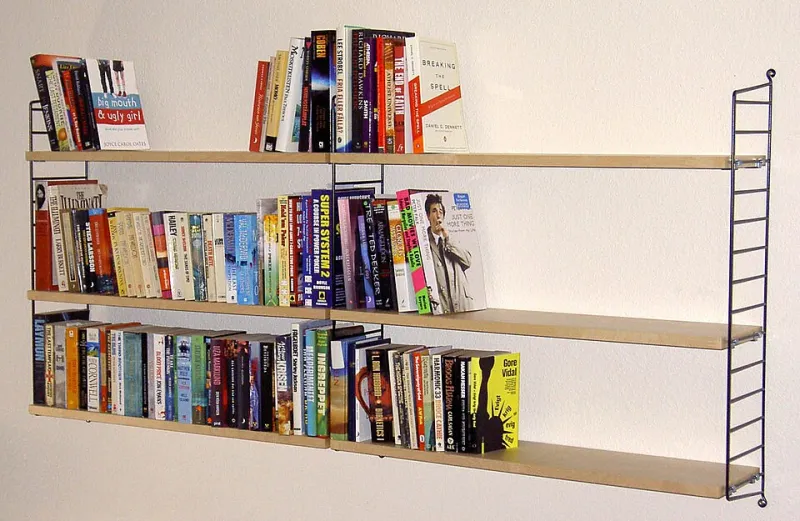
Photo: Entheta, CC BY-SA 3.0, via Wikimedia Commons
Let's be honest with ourselves for a minute. Very few of the books on your nightstand got there by accident.
Somebody — a talk show host, a library app, a newsletter you forgot you subscribed to — put that book in front of you at exactly the right moment. And you saved it, bought it, or borrowed it, and now it's part of your reading life. That's not a complaint. That's just how discovery works in 2020s America. But it's worth asking: who's holding the keys?
The Big Ten
A handful of curated lists quietly steer an enormous share of American reading. Here's a rough tour of the power players:
- Oprah's Book Club — the original heavyweight. An Oprah sticker can add hundreds of thousands of copies to a print run overnight.
- Reese's Book Club — has essentially become the engine of the modern book-club fiction genre, elevating debut novelists at a pace no traditional outlet can match.
- Read with Jenna — the softer-sell sibling, with a knack for quiet literary fiction.
- The New York Times bestseller list — not a recommendation, exactly, but the scoreboard everyone else plays against.
- Goodreads Choice Awards — the crowd-sourced option, where millions of votes produce a list that functions as a popularity contest with real sales consequences.
- BookTok — not a formal list, but functionally one. A viral TikTok can send a 2016 backlist title to the top of the charts.
- Libby's "Soon to be popular" — the library app's algorithmic prediction of what holds will spike on next. Your public library, quietly doing curation at scale.
- Barack Obama's annual reading lists — reliably send political-adjacent nonfiction into a second sales wind.
- Indie Next List — booksellers voting on what deserves shelf space, still the most trusted list among serious readers.
- Amazon's "Customers also bought" — the least glamorous and possibly most influential list of all. Nobody brags about it. Everybody uses it.
The Case For the Lists
Here's the pro-list argument, and it's a good one: discovery is hard. There are roughly a million books published in the US every year. Without curators — human or algorithmic — most great books would vanish into the noise. The lists surface debut novelists, resurrect backlist titles, and give midlist authors a lifeline that traditional publishing's marketing budgets never could.
Reese's picks, in particular, have launched careers. Libby's predictions get books into the hands of readers who use their public library, not their credit card. These are real, measurable goods.
The Case Against
But here's my nagging worry: the lists are converging. The same ten books dominate the same ten lists, which dominate the same group chats, which dominate the same month of reading. Open any three of the sources above in a given month and you'll find meaningful overlap. The result is a national reading experience that feels increasingly synchronized — everyone reading the book at the same time, then moving on to the next the book.
There's nothing wrong with reading what everyone's reading. Some of those books are excellent. But a reading life built entirely from consensus picks is a narrow one, and the lists create a powerful illusion of having explored when you've mostly circled.
The Bookmark as Resistance
So what's the move? I'd argue it's this: treat the big lists as inputs, not verdicts. Save their picks — sure. But save alongside them. Follow a bookseller, a librarian, a niche newsletter, a friend whose taste doesn't match yours. Build a reading list with some friction in it, some books nobody assigned you.
The best thing about bookmarking culture is that it's personal by default. Your saved list doesn't owe anything to the algorithm or the sticker. It's the one shelf in your life that's genuinely yours.
The lists will keep steering the ship. They're good at it, and mostly well-intentioned. But the interesting readers — the ones whose recommendations you actually want — are the ones who've kept a small, stubborn, uncurated corner of their reading life just for themselves.


